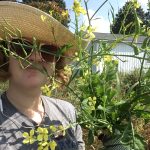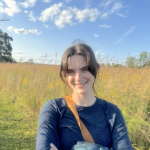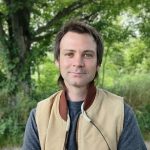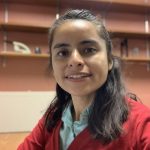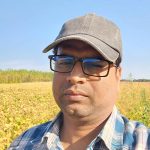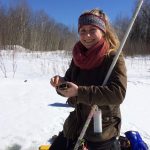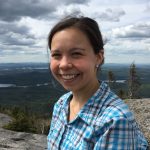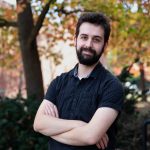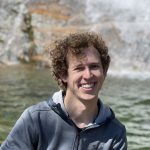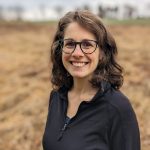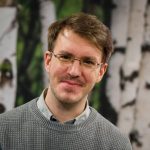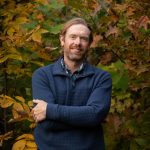
Name: Ajay Bhardwaj (ajaykbhardwaj@gmail.com) Department: Kellogg Biological Station/GLBRC Lab: Hamilton Research Location: Kellogg Biological Station Degrees Held: M.S., 1999 and Ph.D., 2003; Himachal Pradesh Agricultural University, India (www.hillagric.ernet.in) Research Interests: I am currently involved in research investigating hydrology and water cycle components under biofuel cropping systems. Research Statement: My research interests broadly include discovering the critical role of soil as the source and sink of nutrients and contaminants, and interaction of hydrological, physical and chemical processes under diverse management conditions in agricultural, urban and suburban environments. The complexity of the hydro-physicochemical processes that occur in soil have captured the interest and imagination of many researchers in the physical, chemical, biological, and earth science communities. It is becoming widely recognized by scientists, resource economists, and social scientists that soil quality is inextricably linked to water quality/quantity and ecosystem function. Specifically, my future research goals are to develop techniques to analyze the effects of soil, water and crop management on soil-water interaction, understand the existing roles, and evolving new techniques, from the micro- (molecular) to macro-scale (ecological).
Name: Paula de Tezanos Pinto Department: Kellogg Biological Station Lab: Litchman Research Location: Kellogg Biological Station Degrees Held: PhD pending, 2009, University of Buenos Aires; Licentiate in Biological Sciences, University of Buenos Aires, 2000
Name: Ilia Gelfand (igelfand@msu.edu) Department: Kellogg Biological Station/GLBRC Lab: Robertson Research Interests: Biogeochemistry, biosphere atmosphere interactions Degrees Held: M.S. 2002, The Hebrew University of Jerusalem; Ph.D. 2008, Weizmann Institute of Science Statement: My current research focuses on the sustainability of biofuel production in agriculture. Currently, I’m trying to answer the question of how much carbon production of the “green” energy costs, or how “green” is green energy? The main attempt in my current research is to combine carbon budgets of the different biofuel producing systems.
The carbon budget is simply mass balance of all carbon (CO2) used to produce the biofuel in a given agro-ecosystem. For this end we are measuring soil emissions of the main greenhouse gases, using automatic chambers together with measurement of biomass production and changes in soil organic carbon concentration.
My past research has looked at the influence of afforestation of semi-arid shrubland on the soil and ecosystem N cycling.
Name: Poonam Jasrotia (poonamjasrotia@gmail.com) Department: Kellogg Biological Station/GLBRC Lab: Robertson Research Location: Kellogg Biological Station Degrees Held: M.S., 1999 and Ph.D., 2004; Himachal Pradesh Agricultural University, India (www.hillagric.ernet.in) Statement: My current research goals evolve around studying the sustainability of biofuel cropping systems, in particular, assessing biomass yield and quality, and environmental impacts. I am interested in determining which biofuel crops are more economically as well as environmentally sustainable. Because cellulosic crops, such as switchgrass and native prairie, can be grown on land not suitable for food production, they can help to avoid the food vs. fuel competition that is a criticism of grain-based ethanol. Cellulosic crops are mostly perennials, and once planted, require little management throughout the subsequent years, and have conservation and environmental benefits that are potentially quite significant.
As I am an insect ecologist, I am also interested in insect species in biofuel crops and their eco-friendly management so as to benefit the end- user as well as maintain essential ecosystem services.
Name: Stuart Jones (stujones@msu.edu) Department: Kellogg Biological Station Lab: Lennon Degrees Held: B.S. in Biology 2003, University of Wisconsin-Madison; PhD. in Limnology and Marine Sciences 2008, University of Wisconsin-Madison Research Interests: Biogeochemistry, microbial and ecosystem aquatic ecology Statement: My research is motivated by the fundamental role microbes play in all biogeochemical processes. I employ a diverse set of techniques to mesh distinct datasets including microbial community composition and genetic expression, high-resolution sensor data, and biogeochemical measures. In addition, I employ bioenergetic and ecosystem-scale mass balance models to understand broader scale processes. The key to future research will be incorporating these diverse datasets in a predictive approach. I am extremely excited about my research at the interface of microbial and ecosystem aquatic ecology, and believe that a mechanistic understanding of linkages between microbial genetic expression and ecosystem processes will allow me to explore the implications of future global environmental scenarios.
http://www.msu.edu/~stujones
Name: Neville Millar (millarn@msu.edu) Department: Kellogg Biological Station Lab: Phil Robertson (EPRI) Research Interests: Ecosystem Sustainability, Greenhouse Gases, Carbon and Nitrogen Biogeochemistry Research Location: KBS Degrees Held: B.Sc. 1994. University of St. Andrews, Scotland, UK; M.Sc. 1996. University of London, UK; Ph.D. 2002. Imperial College London, UK. Statement: My research focuses on greenhouse gas emissions and carbon and nitrogen biogeochemistry, with the aim of utilizing various land management strategies to mitigate these emissions, reduce nutrient loss and promote ecosystem sustainability. My past work has looked at agroforestry practices on smallholder farms in East Africa, and the effects of elevated carbon dioxide (FACE) on crop yield and microbial communities in European grasslands.
Name: Jon O'Brien (obrien97@msu.edu) Department: Kellogg Biological Station Lab: Hamilton Research Interests: aquatic biogeochemistry, nutrient cycling, stream and wetlands ecology Research Location: KBS Degrees Held: Ph.D., 2006, Kansas State University; M.S., 2002, Southern Illinois University at Carbondale Statement: Human activities, such as agriculture and urban development, can lead to elevated nitrogen (N) concentrations in streams and rivers, producing to algal blooms in downstream estuaries and marine ecosystems. Aquatic organisms have the ability to remove some N before it reaches coastal areas. Recent research has highlighted the role that biotic assimilation plays in N transport in stream systems; however the fate of assimilated N is not well understood. I am conducting experiments using in-situ chambers to label stream biofilms, allowing us to track the retention time and eventual fate of assimilated N. In addition, I am working on a project investigating the role of wetlands in N retention with in stream networks. Wetlands residing within the stream channel (through-flow wetlands), often created by beaver dams or old impoundments, have a disproportionate effect on a stream network’s water quality. We measured the net N removal from 15 through-flow wetlands and found that these ecosystems are consistent sinks for nitrate (the prominent form of N) throughout the year and can have a significant impact on the ability of watersheds to retain N.
I am also working on a project investigating effects of flooding and drying on the retention of phosphorus (P) in aquatic ecosystems. Retention and release of P by aquatic sediments can greatly influence primary production and bacterial growth in lakes and wetlands. Seasonal drying of sediments can alter microbial and P-sorption characteristics, altering sediment nutrient cycles once the wetland re-floods. To study this, our lab is monitoring ‘natural experiments’ in which the installation of water control structures will cause significant drying and flooding in lake and wetland systems. Similarly, we are using smaller scale experiments to look at mechanistic changes in sediment P chemistry and P-adsorption capacity due to drying and re-wetting. This research will help us better manage our aquatic ecosystems.
Name: Bruce Robertson (roberba1@msu.edu) Department: Kellogg Biological Station Lab: Schemske Research Interests: Maladaptation, habitat selection, ecological and evolutionary traps, spatial and landscape ecology, behavioral ecology, conservation biology, ornithology sensory ecology, fire ecology Research Location: KBS Degrees Held: Ph.D. 2007, University of Montana; B.S. 1996, University of Notre Dame Statement: My current research focuses on assessing the value of contemporary and potential biofuel crops (corn, switchgrass monoculture and mixed-grass prairie) to avian and arthropod biodiversity. Increasing demand for energy coupled with reduced oil availability has resulted in rapid and dramatic increases in the price of petroleum and spurred increased interest in the development of alternative fuel sources. Cellulosic ethanol production promises greatly increased energy efficiency and could be a win–win for farmers, soil and water conservation, wildlife, and the environment. To date, there is limited published scientific information available linking changes in biodiversity to agricultural land-use associated with corn or switchgrass production. This research weds sensory and landscape-ecology approaches/perspectives. Specific projects will 1) quantify the abundance and diversity of bird species associated with corn, switchgrass, and native mixed-grass prairie experimentally and statistically controlling for scale-dependence in habitat structure; 2) formally review extant data on the this subject within a meta-analytical approach; 3) test the relative importance of area- and edge-effects in shaping distributions of grassland birds within these habitat types; and 4) test among mechanistic hypotheses explaining area/edge sensitivity in grassland birds.
The evolution and ecology of maladaptation is a particular fascination of mine, and I have a deep interest in ecological and evolutionary traps—cases in which rapid environmental change has uncoupled the proximate cues organisms use to make decisions from the expected evolutionary outcomes of responding to those cues. I strive to investigate these fascinating cases empirically and theoretically, using conceptual and modeling approaches. I am currently working with colleagues to draw attention to the role of polarized light pollution in triggering ecological traps and other maladaptive behaviors and to model the potential population consequences of ecological traps under difficult ecological and evolutionary scenarios. Other topics I write on include: the role of temperature in microhabitat selection in birds, nest predation vs. food in shaping laying decisions, and how fire severity can shape post-fire biodiversity.
Name: Donald Schoolmaster (schoolm4@msu.edu) Department: Kellogg Biological Station Lab: Kay Gross Research Interests: Theoretical ecology, plant population and community ecology Research Location: Kellogg Biological Station Degrees Held: Ph.D. 2004, University of Michigan; M.S. 1998, University of Michigan Statement:
Homepage
Name: Sara Parr Syswerda (parrsar1@msu.edu) Department: Kellogg Biological Station Research Interests: Research Location: Kellogg Biological Station Degrees Held: Ph.D., 2009, MSU, Crop and Soil Sciences
|