
W.K. Kellogg Biological Station

  • Kellogg Farm
  • Bird
    Sanctuary
  • Conference Center
    & Manor House
  • Home
  • About KBS
    • About Home
    • Mission and History
    • Media
    • Resources for Faculty & Staff
    • Inclusion
    • Employment
    • Contact Us
  • Research
    • Research Home
    • Research Highlights
    • Facilities and Field Sites
    • Conduct Research at KBS
    • Visiting Scholars and Scientists
    • Seminar Programs
    • Publications
      • Publications 2020-Present
      • Theses and Dissertations
  • Education
    • Education Home
    • Graduate Programs
    • Undergraduate Programs
      • URA Program
      • REU Program
      • Internships
    • Summer Courses and Academic Workshops
    • Financial Support & Housing
    • K-12 Programs
      • Classroom Resources
      • Professional Development
      • Workshops and Institutes
      • Elementary Teacher Program
      • Research Experiences for Teachers
      • Data Nuggets
  • Outreach
  • People
    • People Home
    • Administration / Staff
    • Faculty
    • Adjunct Faculty
    • Postdoctoral Research Associates & Academic Staff
    • Graduate Students
    • Visiting Scholars
    • Alphabetical Directory
  • Support
    • Support Home
    • Become a Member
    • Volunteer
    • KBS Alumni
  • Visit
    • Visit Home
    • Directions & Maps
    • Tours
  • Events
Home | KBS News | The carbon footprint of irrigation

The carbon footprint of irrigation

10.31.18 KBS News, Publications, Research

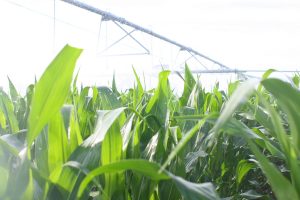
Irrigated corn at KBS Long-Term Ecological Research site

A paper by former KBS graduate student Bonnie McGill, along with Steve Hamilton, Neville Millar, and G. Philip (Phil) Robertson, was recently published in Global Change Biology. The study focused on how irrigation affects greenhouse gas emissions from croplands, based on research conducted at KBS’s Long-Term Ecological Research site.

This is the first irrigation study to account for carbon dioxide and nitrous oxide degassing from supersaturated groundwater, and this is the first accounting for an irrigated system in the upper Midwest where irrigated cropland is rapidly expanding. 

The research found that the carbon-sequestering rainfed system switched to a net source of emissions with irrigation. But when the irrigated system’s increase in yield was accounted for, emissions per unit yield were not very different between the rainfed and irrigated systems. If this increased yield helps avoid land conversion to cropland elsewhere, it may help avoid environmental costs such as greenhouse gas emissions. However, impacts on water resources will still need consideration.

Read the full paper here and visit Bonnie’s blog post to learn more about the carbon footprint of irrigation.

McGill is currently continuing her research as the David H. Smith Conservation Research Fellow at the University of Kansas.
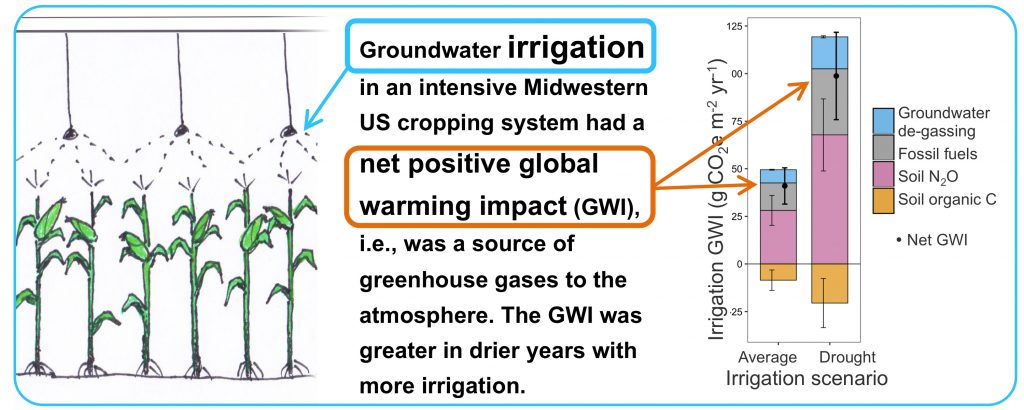
Illustration done by author Bonnie McGill. Groundwater irrigation had a net positive global warming impact.

Tags: greenhouse gas, publications, research

RECENT POSTS

05.29.26

LTER Artist-in-Residence program marks its fifth year, welcomes Ellen VanderMyde for 2026 residency

05.29.26

Patti Chipman, supporter of the Kellogg Bird Sanctuary, receives 2026 CANR Honorary Alumni Award

05.28.26

Saturday, June 20 | Behind the Scenes: Raptors

Categories

  • COVID-19 resources
  • Events
  • Graduate Students
  • Grants and funding
  • Guest post
  • K-12 Partnership
  • KBS History
  • KBS News
  • Publications
  • Research
  • Stories and blog posts
  • Uncategorized
  • Undergraduate experiences

A legacy of conservation; a commitment to sustainability.

W.K. Kellogg Biological Station
3700 E. Gull Lake Drive
Hickory Corners, MI 49060
(269) 671-5117
info@kbs.msu.edu


Find us on social media.

Sign up for our monthly newsletter

Get regular updates from KBS about research, events, and more!
*indicates required
  • Call us: (269) 671-5117
  • Contact Information
  • Sitemap
  • Privacy Statement
  • Site Accessibility

Call MSU: (517) 355-1855 | Visit msu.edu | Notice of Nondiscrimination

SPARTANS WILL | © Michigan State University Board of Trustees