
The W.K. Kellogg Biological Station’s goals of research, education and outreach challenge us to move our studies of ecology and sustainable agriculture outside the borders of the labs and fields of KBS. This year, KBS research reached the fields of local farms, classrooms in nearby school districts, community events, and more.
MiSTRIPS
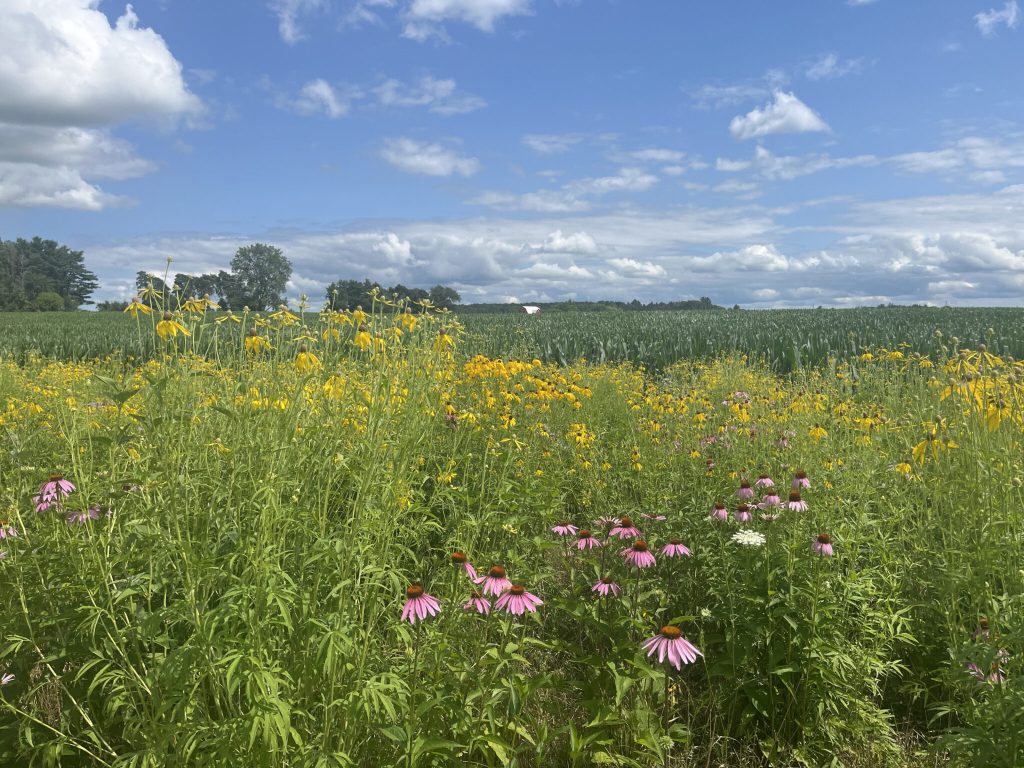
MiSTRIPS is the Michigan arm of a multi-state initiative, Science-based Trials of Row Crops Integrated with Prairie Strips, which aims to increase the adoption of prairie strips — a conservation practice that strategically places native prairie plantings into agricultural landscapes across the Midwest. MiSTRIPS is led by the KBS Long-Term Ecological Research program, or LTER.
Some impacts of MiSTRIPS:
- MiSTRIPS has established over 50 acres of prairie in agricultural lands across Michigan.
- As of 2025, 11 farmers have joined the MiSTRIPS program, with an additional 10 farmers interested in prairie strip implementation.
- Participants include row-crop farmers, blueberry farms, orchards, hay and vegetable farmers.
- MiSTRIPS farms serve as sites for on-farm research by LTER scientists who collaborate with farmers to test ideas about plant community assembly, soil health, and best restoration practices.
The program’s impact now reaches far beyond original expectations, creating a regional collaborative network of farmers, conservation districts, MSU Extension educators, teachers, artists, and local Tribes.
An extension of MiSTRIPS is a new collaborative study between the Michigan Department of Natural Resources, farmers, and the KBS LTER is working to understand the impacts of replacing underperforming croplands with native perennials. The group has identified areas within corn-soy fields at the Allegan State Game Area in Michigan that are not economically profitable for the farmers who work them. Starting in 2025, portions of these lands are being taken out of production and, in consultation with farmers, planted into native prairie.
Farm Resilience Project
A newly funded project led by Dr. Christine Sprunger seeks to understand how extreme weather events impact crop yields, soil health, greenhouse gases, and the economic well-being of farmers across Michigan.
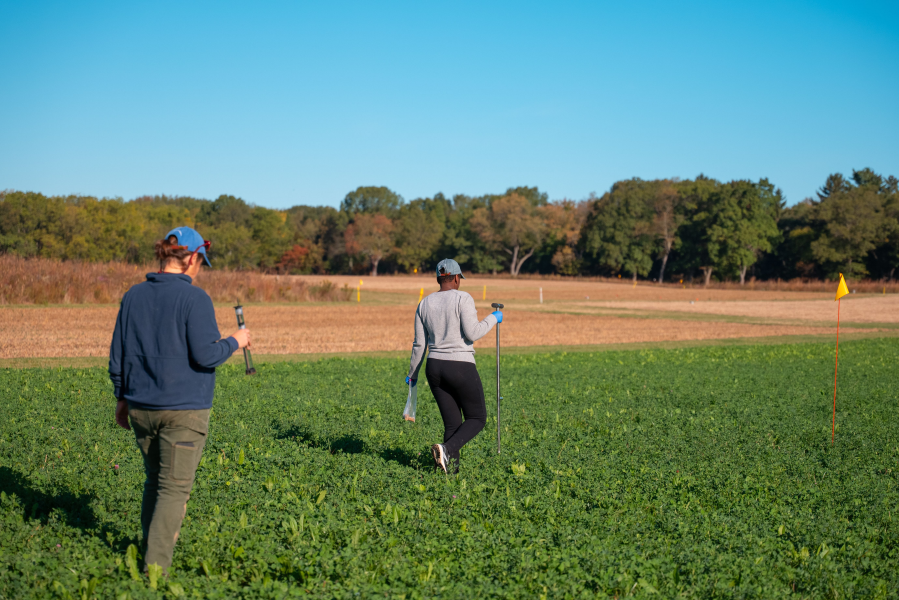
In fall 2024, the research team working on the Farm Resilience Project enrolled 91 farmers and sampled soil on 187 fields across 39 counties. Farmers received a comprehensive soil health report, which contributed to state efforts toward creating a regional soil health database.
In 2025, a subset of 25 farmers were selected to further participate in the two-year study. These participants collected soil and greenhouse gas samples throughout the growing season, and they had opportunities to network with other farmers, commodity groups, and researchers. KBS faculty and staff involved in the project hope that these on-farm collaborations will generate new ideas for the next version of the KBS Long-Term Agroecosystem Research—LTAR—Aspirational Cropping System experiment, which is set to be updated in 2026.
Listening sessions with ag professionals
As part of the APEAL Public Engagement with Science Working Group, Christine Charles, member Extension educator at KBS, along with partners at KBS and MSU Extension, hosted focus groups with agricultural professionals who work with farmers regularly, with the goal of exploring how they might work together to support farmers. The sessions revealed promising, immediate connections between research insights and on-the-ground needs.
To better understand how to connect KBS LTER and LTAR research to its intended audiences, Charles turned to professionals who work closely with farmers every day – MSU Extension and Michigan Conservation Districts.
Together, the KBS LTER, KBS LTAR, and MSU Extension hosted a series of focus groups to bring together these entities, hoping to synthesize common questions from farmers and identify areas of concern that might prevent farmers from adopting conservation practices.
Rather than expecting busy professionals to attend academic meetings, the group brought the conversation to a place they already gathered: the annual Agricultural Crop Summit, which attracts an array of agricultural professionals from across the country.
These conversations piqued considerable interest, and the project resulted in a summary report that hopes to inspire future research and outreach efforts.
Among the early outcomes from the listening sessions was the creation of a bulletin on no-till agriculture. A substantial body of research on this topic already existed, but the group realized that it wasn’t packaged in a usable way. The bulletin was crafted by Charles, and can be found here. The project was funded by Project GREEEN.

K-12 classroom visits
In addition to the popular KBS K-12 Partnership workshops and institutes, which connect area educators with KBS research and offer professional development, KBS staff and graduate students are bringing scientific inquiry straight to the classroom.
At Gull Lake Community Schools, students at multiple grade levels have engaged with current research, using their natural curiosity to explore scientific concepts and developing skills they can use in and out of the classroom.
High school students were able to take biology classes structured around studying the monkey flower, working with MSU and KBS faculty to engage with dynamic research projects around the plant.
At the middle school, students benefit from their teachers’ participation in KBS K-12 Partnership professional development programs. With the help of that programming, science education for these students is hands-on and immersive in current research.
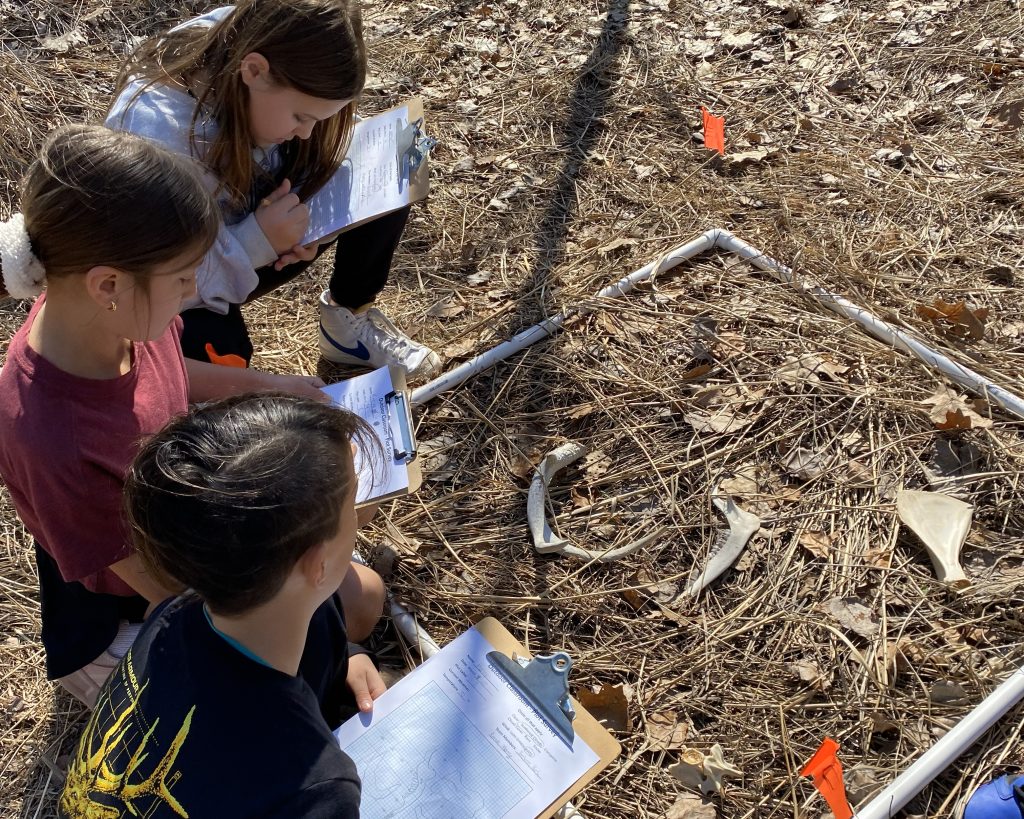
Younger students also had the opportunity to explore scientific inquiry and the natural world with KBS staff and graduate students. Using their outdoor classroom, fourth-grade students honed their observational skills by studying found objects like leaves, seed pods and even bones.
Drew Bordner, Gull Lake’s assistant superintendent of curriculum and instructional technology, said of these partnerships, “We extend our heartfelt gratitude to the exceptional science educators throughout our district, the dedicated KBS team, and the many graduate students who have contributed to these project-based learning experiences.
“This collaboration is transforming science education across our district and empowering students to become scientists in both the classroom and in their everyday lives.”
Outreach and education are deeply embedded in the KBS mission. Graduate students, staff and faculty Kellogg Biological Station are continually working to identify new ways to reach out to and engage with our local communities.
A legacy of conservation; a commitment to sustainability.
3700 E. Gull Lake Drive
Hickory Corners, MI 49060
(269) 671-5117
info@kbs.msu.edu
Find us on social media.