
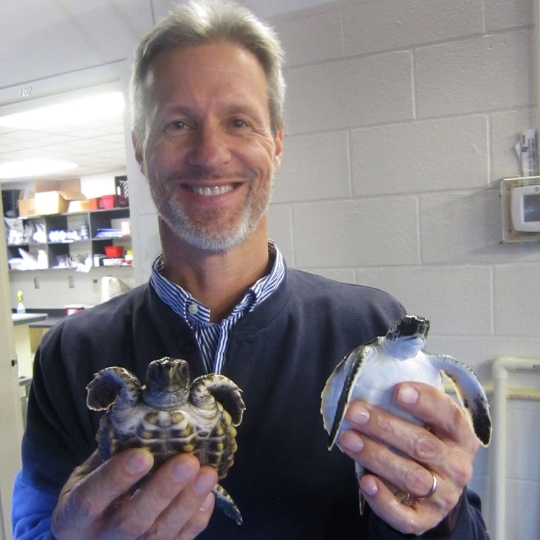
Fred Janzen knows a thing or two about the habits of turtles.
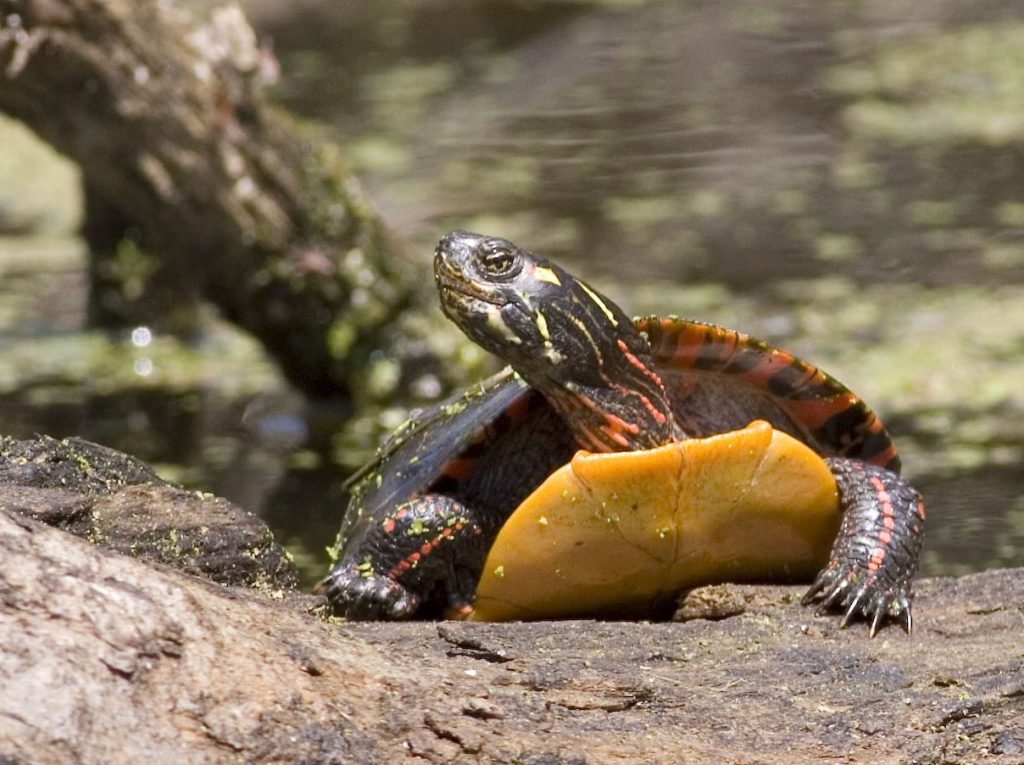
In the late 1980s, when he first started monitoring painted turtles that nest along the flat, grassy banks of the Mississippi River between Iowa and Illinois, females started coming out of the water to lay their eggs in early June. These days, some females are already digging their nests by mid-May.
“In the span of a few decades, the onset of the nesting season was almost two weeks earlier than it had been,” said Janzen, a professor in the Department of Fisheries and Wildlife at Michigan State University, core faculty in the Ecology, Evolution, and Behavior program, and faculty at the W.K. Kellogg Biological Station.
A new analysis of data on 73 species ranging from songbirds to water snakes published in Nature Communications confirms what researchers like Janzen have reported for some time: animals are changing their habits in the face of warming.
But the study also reveals something surprising: “They’re not just changing their behavior in response to climate change and doing fine,” Janzen said. “They’re actually flourishing.”
Thriving, but for how long?
Janzen contributed data on painted turtles to the study, which was led by Viktoriia Radchuk at the Leibniz Institute for Zoo and Wildlife Research in Berlin as part of a collaboration between more than 80 scientists from 18 countries.
For the study, the researchers scoured the results of 213 animal studies looking for information on how they responded to changes in temperature, and what this meant for their numbers over time.
Across studies, they found that most species shifted their timing in warmer years. The analysis includes data showing that red deer on Scotland’s Isle of Rum are giving birth earlier in the year than they did a few decades ago. Marmots in Colorado are emerging sooner from hibernation. And great tit chicks in the United Kingdom are hatching out ahead of their normal schedule, among others.
But by analyzing decades of population trends on things like migrating falcons, rutting deer, and birthing bighorn sheep, the scientists discovered that most species that have shifted their habits are also managing surprisingly well — maintaining or even increasing their numbers despite warming.
While this is promising news, Janzen cautions that the results are no guarantee that animals will cope with climate change indefinitely.
“We’re not saying that animals have this problem solved,” Janzen said.
He added that even the most flexible or adaptable species will have limits. “Plasticity can be exhausted,” Janzen said. “Assuming that everything’s always going to be okay would be a mistake.”
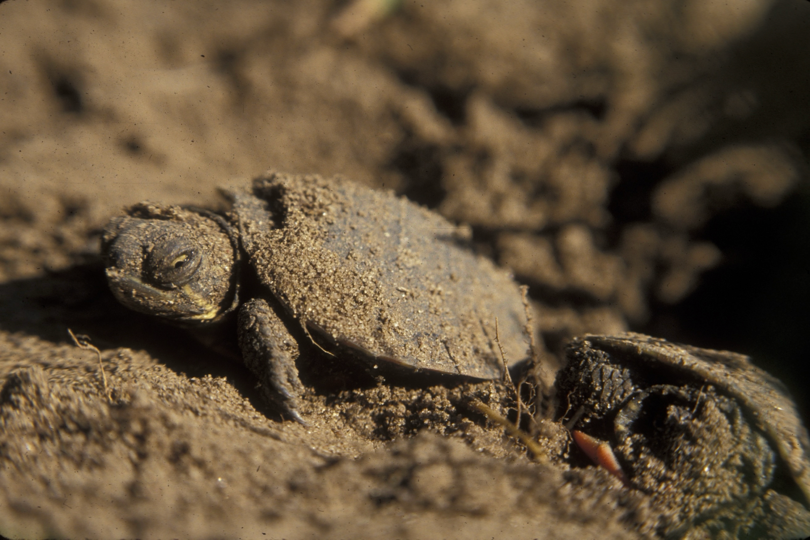
Since the majority of data were from warm-blooded animals like birds and mammals, Janzen said it would be interesting to see how the results held up under an analysis including more cold-blooded species like turtles and other reptiles, which often aren’t able to use their bodies to keep their developing babies within suitable temperatures.
Janzen also said it’s gratifying to know that, since his first days watching nesting females on the banks of the Mississippi at what he and his students dubbed “Turtle Camp,” other scientists have begun to harness their data for a range of research projects. “These data live on into the future for smart people to use for other questions. So I’m really happy about that.”
A legacy of conservation; a commitment to sustainability.
3700 E. Gull Lake Drive
Hickory Corners, MI 49060
(269) 671-5117
info@kbs.msu.edu
Find us on social media.